




Israel’s election produced no clear winner on Tuesday night, with Prime Minister Benjamin Netanyahu and his main rival, Gadi Eisenkot, both falling short of the 61 seats required for a majority in the 120-member Knesset, according to election projections.
With more than half the votes counted, Channel 12 and Ynet projected Netanyahu’s bloc winning 56 seats, down from the 68 seats held by the outgoing coalition. The bloc led by Eisenkot’s Yashar party was projected to secure 48 seats, while Likud remained on course to emerge as the largest single party.
Parties opposed to Netanyahu were projected to secure a combined 65 seats, according to the latest Channel 12 and Ynet projections. However, the opposition remains divided across right-wing, centrist and left-wing parties, as well as Jewish and Arab political groups, complicating efforts to form a coalition.
Netanyahu, Eisenkot Claim Political Momentum
As projections indicated a hung parliament, both leaders addressed supporters, seeking to frame the results as a political success.
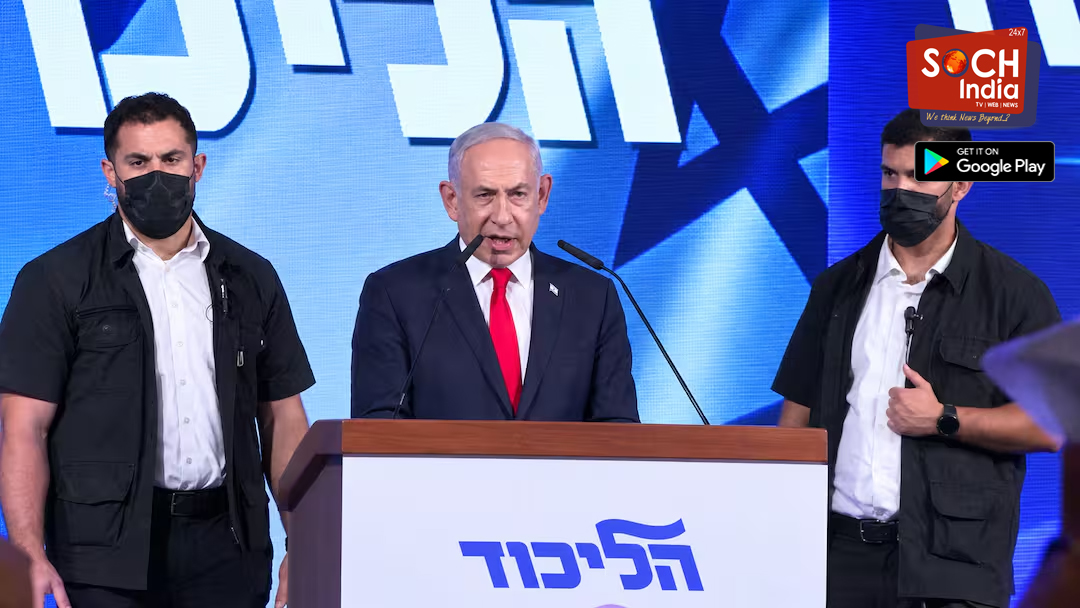
Speaking at Likud headquarters in Jerusalem, Netanyahu thanked voters for what he described as renewed confidence in his leadership. He stopped short of declaring victory but argued that Likud’s position and the performance of right-wing parties gave him grounds to claim progress.
“Two things became clear tonight: Likud is the largest party in Israel. There is no dispute about that,” Netanyahu said. He added that the right-wing bloc had a “clear, decisive majority among the Zionist and Jewish public”.
Eisenkot, speaking at his election headquarters in Tel Aviv, also refrained from declaring victory but said the results reflected a public desire for political change.
“We have made history! The public has voted for change. The coalition of failure has lost the people’s trust,” he said. He added that the Israeli public had voted against Netanyahu continuing as prime minister.
Shekel Falls Amid Political Uncertainty
Israel’s shekel weakened against the US dollar following the inconclusive election result, as uncertainty persisted over the formation of the next government.
The currency depreciated 0.7% to 3.0765 shekels per dollar in morning trading in Tel Aviv.
The shekel had reached a three-week high on Tuesday as investors anticipated a definitive election outcome that could reduce political uncertainty and pave the way for a stable coalition government. The lack of a clear majority has complicated those expectations.
Trump Credits Endorsement
US President Donald Trump credited his endorsement of Netanyahu for what he described as the Israeli prime minister’s gains during the election.
In a post on Truth Social, Trump said the political tide had turned after he backed Netanyahu. He described the outcome as a “big come-from-behind stalemate, or even a WIN for Netanyahu”.
Trump added that his endorsement was intended to support what he considered good for the Middle East, Israel and the United States.
With neither bloc projected to reach the 61-seat threshold on its own, coalition negotiations are likely to be central to determining who can form Israel’s next government. The final outcome will depend on the completed count and the ability of political parties to assemble a parliamentary majority.