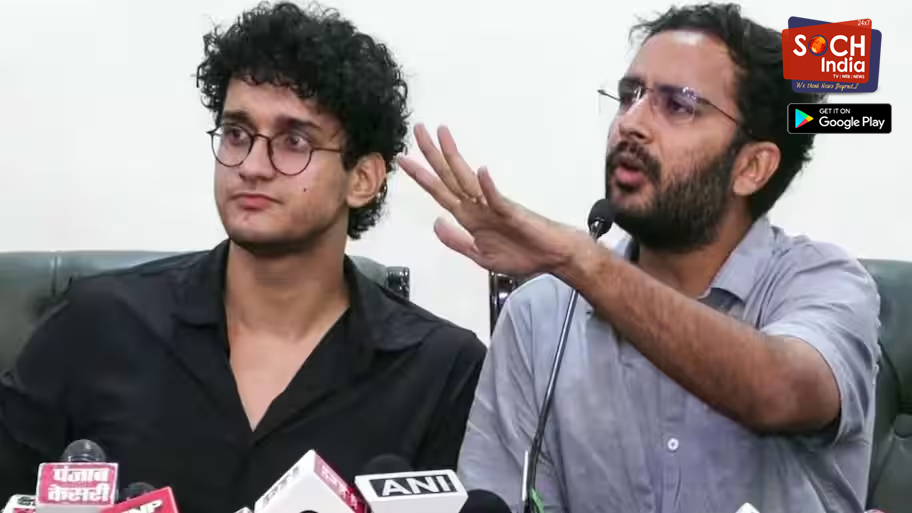






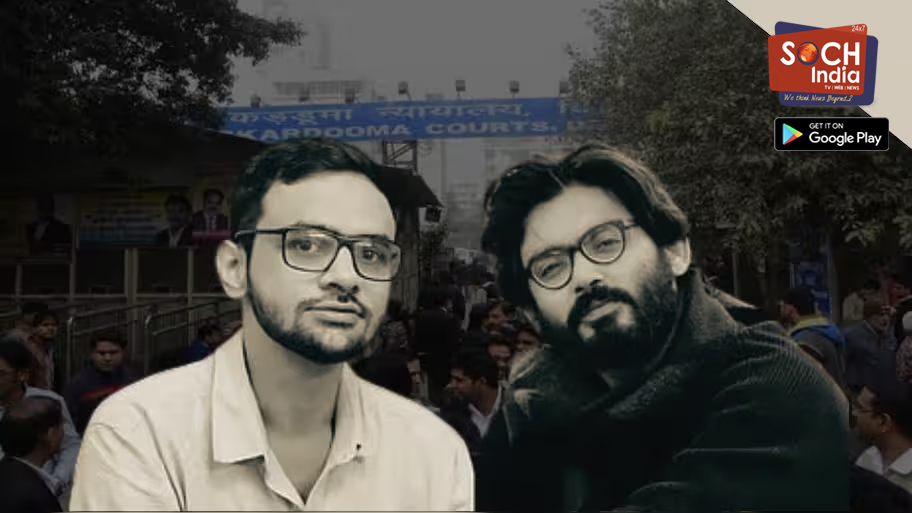
Delhi’s Karkardooma Court on Saturday rejected the regular bail pleas of Umar Khalid and Sharjeel Imam in the Unlawful Activities (Prevention) Act (UAPA) case related to the alleged larger conspiracy behind the Delhi riots of 2020.
Additional Sessions Judge (ASJ) Sameer Bajpai pronounced the order after hearing submissions from the counsel for the accused and the Delhi Police.
The accused had approached the trial court seeking regular bail after their earlier pleas were dismissed by the Supreme Court on January 5, 2026.
Sharjeel Imam’s bail application had argued that there were no significant developments even after six months of the Supreme Court judgment and that he has been in custody for nearly six years.
A separate bail application was also filed on behalf of Umar Khalid.
On June 13, the court issued notice to Delhi Police on Sharjeel Imam’s bail plea, while notice on Umar Khalid’s plea was issued on June 9.
The application filed by Sharjeel Imam, through Advocate Ahmad Ibrahim, highlighted significant subsequent developments after the Supreme Court judgment and pointed out that despite the passage of more than six months, the trial had not progressed even to the stage of framing of charges.
Arguments on the charge remain incomplete. The plea had also referred to observations in the Gulfisha Fatima case and other judgments, including the order dated May 22, 2026, in the Tasleem Ahmed case, where a coordinate bench had granted interim bail to a co-accused and referred the larger legal question on bail under Section 43D(5) of UAPA to a larger bench.
It is highlighted that a coordinate Bench of the Supreme Court has, in the Syed Iftikhar Andrabi VS National Investigation Agency case, expressly held that the judgment in Gulfisha Fatima has hollowed out the constitutional force of the binding three-Judge Bench decision in K A Najeeb, and has made a clear departure from its ratio.
The plea has also highlighted that the very Bench that authored Gulfisha Fatima had thereafter passed an order on 22.05.2026 in the Tasleem Ahmed case, granted interim bail to a co-accused in the same in the larger Conspiracy case and simultaneously referred the entire legal question governing bail under Section 43D (5) UA(P)A to a larger Bench to be constituted by the Chief Justice of India
However, after hearing both sides, the court rejected the bail applications of both Umar Khalid and Sharjeel Imam.
Both Sharjeel Imam and Umar Khalid have been booked under section 43 D (5) of UAPA in the 2020 Delhi riots larger conspiracy case.
According to the Delhi Police charge-sheet, the February 2020 riots were not a spontaneous event but the culmination of a well-planned larger conspiracy that began in early December 2019. The alleged conspiracy involved, mobilisation and organisation of protests against the Citizenship Amendment Act (CAA), strategy of enforcing “chakka jam” (road blockades) instead of peaceful dharnas to disrupt civic life, creation of WhatsApp groups, coordination committees, and sustained blockades in mixed-population areas and acts intended to create conditions for confrontation and communal violence.
Sharjeel Imam was alleged to have played a foundational role at the inception stage through inflammatory speeches, pamphlets, and mobilisation efforts in December 2019–January 2020. The prosecution claimed his role was not limited to mere protest but part of a calibrated plan of disruption.Umar Khalid was described as a principal conspirator and coordinator.
The prosecution alleged he, directed the creation of key WhatsApp groups, participated in meetings where the chakka jam strategy was finalised, played a central role in planning and linking various protest sites and propagated the overall design of the conspiracy.
The case relies on a chain of circumstantial evidence including speeches, WhatsApp chats, meeting records, pamphlets, and statements of protected witnesses. The prosecution maintained that physical presence at the riot sites or recovery of weapons is not necessary in a conspiracy case