







India on Friday criticised the United States’ decision to suspend eight major technology companies from its Permanent Labour Certification (PERM) programme, warning that the move ‘undermines the shared ambitions’ of the two countries, while strongly objecting to US Vice President JD Vance’s description of H-1B visa workers as “indentured servants”.
The Ministry of External Affairs (MEA) said the suspension of PERM applications would not, by itself, affect the validity of existing H-1B visas or the status of visa holders and their dependents.
However, it acknowledged that the decision could affect the Green Card process for eligible employees of the companies concerned.
The response comes after the US Department of Labour suspended several major technology and outsourcing firms from the programme amid multiple active federal investigations.
The action has also drawn attention to the contribution of Indian professionals to the American economy and the future of skilled-worker mobility between the two countries.
India says US decision does not advance shared ambitions
In its statement on Friday, the MEA stressed that the PERM programme, which is linked to employment-based permanent residency, is separate from the H-1B visa programme.
“It should be noted that PERM is distinct from the H-1B visa programme. The suspension of PERM applications does not, by itself, affect the validity of existing H-1B visas or the status of H-1B visa holders and their dependents, though there could be some impact on the permanent-residency/Green Card process of eligible employees of the affected companies,” the ministry said.
India also underlined the economic benefits of talent mobility, arguing that it creates opportunities for Indian professionals while helping American companies access skilled workers who contribute to innovation, research, productivity and competitiveness.
The MEA said such mobility also supports job creation and shareholder wealth in the US, describing it as an area of significant mutual benefit for both countries.
“The steps announced by the US do not advance the shared ambitions of both countries,” the ministry said, adding that it expected all stakeholders to recognise the value of talent mobility.
Vance’s ‘indentured servants’ remark ‘deeply offensive’
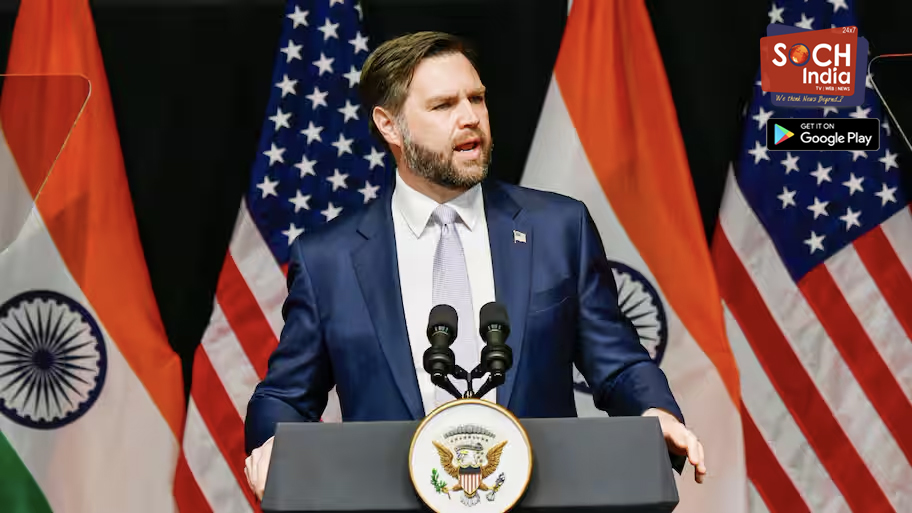
The ministry also took issue with comments by US Vice President JD Vance, who described H-1B visa workers as “indentured servants” while speaking at a news conference on visa fraud on Thursday.
Vance argued that H-1B workers were paid less than American employees in comparable positions and accused foreign outsourcing firms of bringing in overseas workers while American employees were laid off.
“If you are working as an H-1B visa in the United States of America, you’re earning $20,000 less than an American citizen hired in the same position. If you were brought in by one of these foreign outsourcing firms, you’re making $48,000 less than an American citizen in a similar position,” Vance said.
He alleged that companies were using foreign workers to undercut American wages and replace domestic employees.
Responding to the remarks, the MEA said such descriptions were unwarranted and overlooked the contribution of Indian professionals to the US economy and innovation ecosystem.
It also pointed to the role generations of immigrants had played in shaping American growth and prosperity.
“Resorting to terminology that carries painful historical and colonial legacy connotations is deeply offensive,” the ministry said.
India added that it would continue to monitor developments surrounding the issue.
Eight technology companies suspended from PERM programme
US Labour Secretary Keith Sonderling had announced the suspension of several major technology and outsourcing firms from the Permanent Labour Certification programme, including Cognizant, Infosys, Tata, Wipro, HCL and Capgemini.
US technology companies Microsoft and Adobe were also suspended from the programme.
The US Department of Labour attributed the action to multiple active federal investigations. Sonderling said the companies had collectively sought millions of foreign workers and received hundreds of thousands of H-1B visa approvals and permanent labour certifications.
“Since 2009, just these companies alone have requested almost 3 million foreign workers. They received over 230,000 H-1B Visa approvals and over 100,000 permanent labour certifications, that’s hundreds of thousands of jobs that were taken from American workers,” Sonderling said.
The suspensions mark a further development in the US administration’s efforts to tighten scrutiny of employment-based immigration and foreign-worker programmes.
India’s statement makes clear that New Delhi views the PERM decision as more than an immigration-policy issue, highlighting its potential implications for skilled Indian professionals, American businesses and the broader economic relationship between the two countries.